Dental Express

How Early Americans Took Care of Their Teeth

dental hygiene practices in america

How Early Americans Took Care of Their Teeth: Imagine if, instead of brushing and flossing, you had to fill your mouth with charcoal to clean your teeth. It’s an unappealing thought, yet it was reality for many early Americans who didn’t have the benefit of toothbrushes and toothpaste, let alone family dentistry. Early Americans — from Native Americans to the Pilgrims to the Founding Fathers — found creative ways to help prevent tooth decay, even if those methods would make us cringe today. They were unpleasant and often ineffective, which explains why so many of these early residents, like our first president, had to have dentures.

How did people clean their teeth before toothpaste or toothbrushes?

If you are thinking about when was toothpaste invented, you must first know the reason behind its invention. Salt, rough cloths and charcoal don’t fit the definition of gentle dentistry, yet that was the way people would care for their teeth. Often, they would use water and a rough cloth, scrubbing their teeth. Salt and charcoal were often rubbed across the teeth and then rinsed away. However, the most common way of taking care of teeth involved taking a birch twig and fraying the end, making a primitive brush. Dental powders were also used. They were made from strange concoctions of burned eggshells ashes and animal hooves.

What did they do for dental emergencies?

Today, when you have a dental emergency, you can take advantage of the latest first-aid techniques, easily access a dentist on-call or have a walk-in appointment. However, if you were some of the first American settlers, emergency dentistry didn’t remotely resemble what we have today. Often, there was a town surgeon (in some cases, this was also the barber) who would pull the tooth or possibly try to fight the infections by applying cabbage worms that would eat away at the damaged tissue. This may have been a common treatment because there was a pervasive belief that dental pain was caused by a worm traveling through the mouth. This theory was not debunked until the 1700s.

The first “official” toothbrush in America

Are you curious to know when did people start brushing their teeth? American innovator H.N. Wadsworth held the first patent for a toothbrush in 1857, but it wasn’t until the 1930s that nylon bristles made toothbrushes look more like the ones seen today. In fact, it wasn’t until after WWII that Americans developed the habit of brushing their teeth regularly. This was a habit that American G.I.s brought back with them from Europe.

Thank goodness for modern dentistry!

At our office, you’ll find no twigs, no charcoal and no burned eggshells! You’ll find only the most advanced technology practiced by our wonderful, enthusiastic healthcare family. The last decade has seen revolutionary advancements in dental care, and we implement these latest techniques to create the highest level of care from 3D printing to advanced pediatric dentistry to digital imaging to how to properly brush your teeth. Contact us to learn more about how we can serve you and your family. ___ Dental Express offers dental care for the entire family, including SmileCorrect, Dentures and Implants, emergency dental care and maintenance services. With four convenient locations in San Diego, our practice features compassionate care coupled with state-of-the-art technology. Contact us to schedule an appointment today. ___

Sources:

Scholastic. (Teacher Educational Resources.) Daily Life in the 1620s Online. Strauss, Valerie. “Ever Wondered How People Cleaned Their Teeth Before They Had Toothbrushes?” The Washington Post. Online. University of Michigan School of Dentistry. “A Timeline of Dental Hygiene.” Online.

Your Child’s First Cavity: Dr. Casey Tells You What You Need to Know

childs first cavity san diego dentist

Maybe it starts with a dull, throbbing pain. Or perhaps your child complains that it hurts when she bites down on something hard or opens her mouth really wide. These are all indications that your child could have a cavity. Obviously, getting that child’s first cavity filled might create anxiety in your little one; but you can help your child establish a healthy relationship with the dentist — even in these younger years — by taking care of this child’s first cavity in the best way possible. Our own Dr. Casey provides a few tips for parents.

First and foremost: Stay calm

Some of us are still anxious about going to the dentist well into our adult years; but it’s important to keep in mind that your child will pick up on your anxiety. You can be confident that our Dental Express staff and dentists will go the extra mile to make sure your little one is comfortable. Feel free to call us ahead of your child’s cavity filling to let us know if you have concerns about her anxiety.

Avoid telling your child that a filling is a punishment

It’s a simple tip, but easy to overlook: timing. Now is not quite the best time to admonish your child for not brushing her teeth or flossing every day! Hold off on having that conversation until after the procedure has been completed.

Talk about the procedure ahead of time

Explain what will happen – but be careful of providing too many details. It’s important for your child to understand what to expect in age-appropriate vocabulary. Explain what she’ll see and hear, so she’s not surprised by the “whirring” sound of the drill, but steer clear of using clinical words like “needles” and “drills.” Watching a few videos ahead of time will help! Check out “Dudley the Dinosaur,” the American Dental Association’s ambassador for good dental health. Dudley and his friends learn a lot about going to the dentist in their animated adventures. Sesame Street also has a classic Elmo’s World video about visiting the dentist.

Speak to us about the possibilities of laughing gas or sedatives

Sometimes, a sedative is needed to help younger children when they are having a cavity filled. However, this is not the right choice for everyone. We’ll carefully evaluate your child’s unique situation. Ask me or any of our dentists your questions about using them for this procedure.

Use this opportunity as time to get to know our staff

Hopefully, your child has already met members of our health care team. However, if you’re new to the area, we want you to know that you and your child are always welcome in our office. We find that it’s often useful to have a “getting to know you” meeting with your child before treatment. We’ll show your child the dental chair, the ones who will be caring for him or her, and help ease the anxiety of being in a new place with funny smells and a lot of noises. This way, your child will have a better idea of what to expect. Of course, if your child’s cavity requires immediate attention, we’ll schedule an appointment as soon as possible. As always, we welcome walk-in appointments from both new and established patients.

A trip to the dentist shouldn’t be frightening

Do you remember your first trip to the dentist? What were some of the thoughts or feelings you had? If you were nervous or apprehensive, realize that your child may be experiencing the same thing. It’s natural to be uneasy when facing a new experience; that’s why it’s so important to establish a great relationship with the dentist before a cavity appears. We’ve even compiled a list of 5 ways to make your child’s trip to the dentist a fun experience. Just remember: we’ve helped children of all ages through the experience of getting their first cavity filled. We want to be partners in your care and serve your whole family. Questions? We welcome the opportunity to provide any information you need. ___ Dental Express offers dental care for the entire family, including SmileCorrect, implants, emergency dental care and maintenance services. With four convenient locations in San Diego, our practice features compassionate care coupled with state-of-the-art technology. Contact us to schedule an appointment today. ___

What’s the Best Toothpaste? 3 Things to Consider

best toothpaste for kids and adults

What’s the Best Toothpaste: There’s no such thing as simply selecting a tube of toothpaste. There are dozens of choices on the shelves of your local retail stores. Should you purchase the one with baking soda? What about the brand with whitening power? Or perhaps tartar control would be best? It doesn’t help that you’re bombarded with advertisements online, on television and in magazines. Some of these claims are motivated by marketing departments and not professional dentists. Don’t worry! We’re here to take a lot of the mystery and confusion out of choosing a good toothpaste. We’ve provided three things to consider before your next shopping trip.

Check for the seal of approval

It’s very important to make sure you’re selecting a toothpaste with the seal of approval from the American Dental Association. This means that the product meets the requirement of having certain ingredients and having those ingredients accurately listed on the product. The ADA seal also means the product is created in a supervised, laboratory-controlled environment. This ensures you’re getting a quality product with no additives.

Be wary of “toothpaste promises”

We’ll whiten your teeth! We’ll restore your enamel! Toothpastes make a lot of promises. Ad slogans are splattered all over magazine pages and television. But do these promises really hold up? Let’s look at a few of them:

  • Tooth-whitening: Yes, those toothpastes will work—but the results aren’t nearly as good or as long-lasting as what you’ll get in our office with professional teeth whitening.
  • Restoring enamel: This may be possible, but it depends heavily upon what shape your teeth are in to begin with. If your enamel is breaking down, it’s more important to speak to us so we can help you restore your teeth properly. This will be more effective than any toothpaste.

Personal preference

We confess: we all have our favorite toothpaste flavors. That’s one reason why we offer a variety of them in our office. As long as the toothpaste carries the American Dental Association seal of approval, you’re limited only by personal preference. Favorite flavors can also help encourage children to brush their teeth regularly.

The bottom line? Ask us!

We’re dedicated to caring for your entire family. We want to provide you with timely, accurate information. There isn’t just one toothpaste that is right for everyone. Our dentists will help you determine what toothpaste will meet your needs. We can even provide prescription toothpastes that you’ll only find through our dental offices. Remember, we don’t only want to see you when you have cavities. We want to help you care for your teeth throughout your life. We’d love to treat your whole family and help them stay on track for a lifetime of good oral health. ___ Dental Express offers dental care for the entire family, including SmileCorrect, implants, emergency dental care and maintenance services. With four convenient locations in San Diego, our practice features compassionate care coupled with state-of-the-art technology. Contact us to schedule an appointment today. ___

Sources:

The American Dental Association. “The ADA Seal of Approval: Product Acceptance. “ Online. The Cleveland Clinic. “How to Choose the Best Toothpaste for You.” Online.

Surf’s Up! Meet Dr. Marty

dr marty dentist in san diego

If you enjoy surfing along the California coast, don’t be surprised to see our own Dr. Marty Weinstein catching a few waves. He’s surfed just about every spot along the Pacific Coast Highway. His love of the ocean boils down to his three-word personal mantra: Surfing is life. In 2009, Dr. Marty was the National Collegiate Surfing Champion, and he served as captain of the UCSD surfing team. We’re thrilled to now have Dr. Marty “on board” as a member of our Dental Express family. Of course, there’s much more to Dr. Marty than his surfing expertise (though we admit, we’re somewhat jealous of that). Originally from Santa Ana, Dr. Marty has a special heart for those less fortunate, and he is always striving to make the world a better place through his many volunteer activities. While earning his bachelor’s degree in biology from UCSD, he managed a mobile dental clinic that provided free dental care to the homeless and underserved populations of San Diego County.

Today, he continues to work with the same program by volunteering as a clinical faculty instructor. Dr. Marty also loves caring for the brave men and women who have served our country. After he earned his Doctor of Dental Surgery degree from the University of California-San Francisco (UCSF), he spent an extra year in graduate school training with the VA. This additional training gives him special expertise in helping U.S. veterans suffering from depression, severe dental anxiety, PTSD and other medical conditions. Although Dr. Marty spends a lot of his free time surfing, lately, he’s been making waves on an extensive research study involving tacos and donuts. You read that right: tacos and donuts. Dr. Marty is engaged to Morgan, a kindergarten teacher here in San Diego. They’re busy planning their July 2018 wedding, which will take place in Julian, CA. The food for the reception was an obvious choice; you can’t go wrong with tacos and donuts! Of course, this reception planning requires a lot of “research and development” on the weekends to find the ideal combination. Donuts and tacos — it’s no wonder Morgan said yes!

Want to know more? You can learn more about Dr. Marty and our other Dental Express care providers.

___ Dental Express offers dental care for the entire family, including SmileCorrect, implants, emergency dental care and maintenance services. With four convenient locations in San Diego, our practice features compassionate care coupled with state-of-the-art technology. Contact us to schedule an appointment today. ___

Should You Pull Your Child’s Tooth?

Child’s Tooth

Should You Pull Your Child’s Tooth: To pull, or not to pull? For many parents of young children, that is the question. At first, a loose tooth may only have a slight wiggle. As your child pushes the tooth around with her tongue, it becomes even more flexible — sometimes you may wonder how it is hanging on. We’ve seen this scenario hundreds of times. In fact, we’ve been through it with our own children! We know how important it is to handle a loose tooth properly because these baby teeth provide a path for permanent teeth to come in correctly.

Should you pull your child’s tooth or take a trip to the dentist to have it removed?

In general, you should never attempt to pull loose tooth by yourself. Firstly, you have to search about how to pull a molar out painlessly. If you see a tooth is loose but still attached don’t do anything otherwise it can easily damage tissue or leave parts of the bone still within the socket. Even worse, this damage could lead to an infection. In fact, most loose teeth will eventually fall out naturally, without having to be forced. We believe the best thing to do is let Mother Nature take its course.

What happens when a baby tooth falls out?

By the time your child is three years old, she should have a full set of 20 primary teeth. When it’s time for the permanent tooth to arrive, the roots of the baby tooth dissolve. This allows it to become loose enough to fall out. The tooth should be able to fall out naturally – and painlessly. This clears a path for the permanent tooth to come in. The American Dental Association has some useful information on when your child’s teeth should erupt. These eruption charts are available on the ADA website.

Is there any time when it is okay to pull your child’s loose tooth?

video on the American Dental Association’s website outlines one way to gently remove a loose tooth. However, before you do so, please be sure that the tooth is very loose or dangling in the socket. Also, make sure that your child doesn’t feel any pain when you apply pressure to the tooth. If your child feels pain, that’s a sign that the roots may not have dissolved enough to safely remove the tooth. Gently take a tissue, wrap it around the tooth and squeeze. The tooth should gently fall away.

Some important points to consider before attempting to remove your child’s tooth

You should NOT pull your child’s tooth if:

  • It is only slightly loose. Teeth like this may still be firmly rooted in the socket.
  • Your child says it hurts every time the tooth is touched or pulled.
  • You haven’t spoken to your kids first pediatric dentistry. We want to give you the information you need to help you determine the best thing to do for your child’s teeth.
  • Pulling it may damage the other teeth beside it.

Not sure what to do about your child’s loose tooth? Speak to us first!

We specialize in treating children of all ages, and we are very familiar with the challenges faced when they lose their baby teeth. If you notice that a tooth is loose, contact us so we can give you information you need and answer any questions. Of course, you know better than to follow the old wives’ tail about tying some floss around the tooth and the other end around a doorknob. Ouch. That makes our mouths hurt just thinking about it! We’re not even go into all the things that are wrong with this scenario, but take it from us; this is one method you should never try. And in case you’re wondering, the going rate for the Tooth Fairy is somewhere between one and five dollars per tooth. __________ Dental Express offers dental care for the entire family, including SmileCorrect, implants, emergency dental care and maintenance services. Our practice features compassionate care coupled with state-of-the-art dentistry at four convenient locations in San Diego: DowntownPoint LomaClairemont and Santee. Contact us to schedule an appointment today. __________

Sources:

American Dental Association. Mouth Healthy. “Removing a Loose Tooth. Online at: http://www.mouthhealthy.org/en/ask-an-ada-dentist/removing-loose-tooth American Dental Association. Mouth Healthy. “Eruption Charts.” http://www.mouthhealthy.org/en/az-topics/e/eruption-charts Dental Health Resource Magazine. “How (and When) to Pull Your Child’s Loose Tooth.” http://yourdentalhealthresource.com/aboutyourdentalhealthresourcemagazine/

Why Does My Tooth Hurt? Four Reasons for a Severe Toothache

Four Reasons for a Severe Toothache

“Mommy, my tooth hurt!” No parent wants to hear those words. Severe tooth pain is enough to bring many adults to tears — and it’s even worse for children! There are several things that can cause minor toothaches. However, when the pain is severe, there’s a good chance that you have an infected tooth or a serious problem that requires immediate attention. We’ve outlined four of the most common causes of severe toothaches and a symptom checklist. If you’re experiencing any of these, be sure to see your local dentist as soon as possible.

1. A cracked tooth

If you or your child has a sports injury or a nasty fall, you may have a cracked or fractured tooth. But did you realize that you can crack a tooth from something as simple as grinding your teeth? Even a microscopic crack can cause extreme pain. Some teeth may be severely damaged and must be removed.

What causes a cracked tooth?

There are several ways you can crack a tooth. These include:

  • Biting on hard foods or chewing ice can cause your teeth to crack. Be very careful if your children have a fondness for hard candy. It’s one of the main culprits!
  • Uneven chewing pressure can also damage your teeth.
  • If you have undergone endodontic therapy or root canal treatment, your teeth may be somewhat brittle. As a result, they are more susceptible to fracturing or cracking.
  • Accidents or sports injuries that involve a blow to the mouth are the most obvious reasons your tooth could be damaged.
  • Weak tooth structure can also cause problems. If you have had a large cavity filled or other dental restorations, you are at greater risk for a cracked tooth.

What are the symptoms of a cracked tooth?

If you have any of the following symptoms, give us a call:

  • Sensitivity to hot or cold foods
  • Pain that causes you to chew only on one side of your mouth
  • Sharp pain when you bite down on certain foods
  • Sensitivity to sweet or sour food

While these are the most common symptoms, sometimes there are no signs at all. In cases like that, a dental X-ray is necessary to pinpoint the exact location and extent of the crack.

2. An abscessed tooth

Some severe tooth pain may come and go, but pain associated with an abscessed tooth is constant and miserable. You can even feel the pain in your jawbone!

What causes an abscessed tooth?

An abscessed tooth occurs when bacteria infects the dental pulp. The pulp is the soft tissue inside your tooth. Think of it this way: if your tooth was an orange, the peel would be the white outer enamel. This is the part that you see. The pulp would be the soft part of the orange located underneath the peel. The pulp contains blood vessels and nerves, so any infection causes a lot of pain. Bacteria may enter the pulp through a crack or a large cavity.

What are the symptoms of an abscessed tooth?

Symptoms include:

  • Facial swelling
  • Swollen lymph nodes
  • Fever
  • Sensitivity to hot or cold
  • Pain when biting or chewing
  • A severe toothache with pain that may affect the neck, ear, or jaw

You cannot treat an abscessed tooth at home. Even if the pain goes away, you must be treated by a dentist. If not, the infection can spread to your neck or jaw. Without treatment, you may even develop a serious, life-threatening condition called sepsis. Sepsis means the infection is spreading throughout your body.

3. Impacted wisdom teeth

Wisdom teeth can cause a wide range of problems. Often, there is not enough room for these teeth to come in properly, and they become impacted. This means that the tooth is not coming in straight or it’s not in the correct position.

What causes impacted wisdom teeth?

If there’s not enough room in your mouth for your wisdom teeth to come in properly, they’ll become impacted. Impacted wisdom teeth can not only cause pain — they can also damage neighboring teeth. There’s a 75 percent chance that at least one of your wisdom teeth will be impacted. For these reasons, wisdom teeth are typically removed before the age of 24. For more information, you can check out these pictures of the different types of wisdom tooth impactions.

What are the symptoms of impacted wisdom teeth?

First, only a dental X-ray can determine if you have impacted wisdom teeth. Sometimes, there is no indication… until they become a problem. If that’s the case, you may experience:

  • Jaw pain
  • Bad breath or a terrible taste in your mouth
  • Tender gums
  • Swollen jaw
  • Bleeding gums
  • Difficulty opening your mouth

If your wisdom teeth are impacted, it’s important to schedule regular dental X-rays so your dentist can keep a close eye on them.

4. A deep cavity

First, let’s make one thing clear: any cavity can cause pain. However, when you have a very deep cavity, the pain reaches a whole new level.

What causes cavities?

It’s a recipe for dental disaster: sugars + bacteria = acids that attach your teeth. These acids wear away the outer part of your tooth (called the enamel). If they aren’t filled, the cavities may grow and become so deep that they damage the soft inside of your tooth (the pulp).

What are the signs that you may have a cavity?

Some of the symptoms of a deep cavity are:

  • Sharp tooth pain, particularly when eating something sweet, cold or hot
  • Toothache
  • Pain when biting or chewing
  • Sensitive teeth
  • Holes or pits in your teeth

Cavities are much more common in children, so it’s important to teach your children good habits such as brushing and flossing regularly. If you have any questions, let us know. We love working with children and we consider it a privilege to serve your entire family.

How to Soothe Your Tooth Pain Until You Get to Your Dentist

Sometimes, using a hot or cold compress can relieve pain. Often, over-the-counter medication can also help. However, before giving your child over-the-counter medication, be sure you carefully read the label to see if the medication is appropriate for children. Also, be wary of using herbal remedies. These may interact with any prescription or over-the-counter medications you are taking. Make sure your dentist is aware if you are taking these or other natural remedies. We don’t want you to suffer from tooth pain! If you have any of the symptoms described above, we encourage you to take advantage of our walk-in appointments. __________ Dental Express offers dental care for the entire family, including SmileCorrect, implants, emergency dental care and maintenance services. Our practice features compassionate care coupled with state-of-the-art dentistry at four convenient locations in San Diego: Downtown, Point Loma, Clairemont and Santee. Contact us to schedule an appointment today. __________

Sources:

American Association of Endodontists. “Tooth Pain.” Online. American Dental Association. “Do You Have a Cracked Tooth?” Animated Teeth.com. Online. The Mayo Clinic. “Toothache: First Aid.” Online. “Tooth Abscess: Symptoms and Causes.” Online. “Impacted Wisdom Tooth Pain-Symptoms.” Online. “Tooth Decay and Symptoms.”

Could Your Smile Be Better? Answer These Four Questions

On Broadway, Little Orphan Annie proudly sang “you’re not completely dressed without a smile.” But what if your smile doesn’t give you a lot to sing about? A good smile is about much more than looking great—straight, white teeth often indicate good oral health. Of course, it’s also a huge boost to self-esteem. Studies show that those with white straight teeth tend to be seen not only as more attractive, but smarter as well.

how do i get a better smile and straighter teeth

Could your smile be better?

We’ve compiled this useful quiz, along with some practical tips to help you. Print this list, answer the questions, and then show it to one of our Dental Express professionals.

1) Look in the mirror. What color are your teeth?

  • Brown
  • Off white
  • Perfectly white

If your teeth are stained, the biggest offenders are coffee, tea, and tobacco. If you don’t stop using these products, you won’t be able to maintain a white smile—even if you’ve had treatment. Tobacco use is one of the worst things for your health: it not only damages your teeth, but it also increases your risk of oral cancer. There are several Smile Brighter Teeth Whitening options available. While over-the-counter whitening trays are easily accessible, the bottom line is that they aren’t as effective as treatment from your dentist. Even worse, some of these home treatments can cause sensitive teeth, gum irritation or less-than-stellar results. Dental Express offers options such as in-office tooth whitening and customized trays that are specifically designed to fit the shape of your mouth.

2) Are your teeth crooked or misaligned?

In the past, braces were primarily used by junior high and high school students. But now, adults have realized the value of having a straighter smile. Newer technology is making it easier and more affordable than ever. Dental Express offers SmileCorrect, an affordable way to get a straighter smile for only $200 a month. Why are straight teeth so important? Crooked or misaligned teeth make it difficult to floss and clean between teeth. As a result, bacteria accumulate and multiply, leading to plaque. Plaque build up in turn leads to cavities. If cavities are too deep, you may need a root canal.

3) Are any of your teeth chipped or discolored?

A crown is a good way to cover teeth that are discolored, chipped tooth, or cracked teeth. A crown can make your tooth stronger and improve its appearance. Crowns can also be used to attach bridges, protect a weak tooth from breaking or restore one that’s already broken.

4) Do you have missing teeth?

Missing teeth not only present cosmetic dentistry grants concerns: They can also damage healthy teeth. Constant chewing can eventually shift your bite over time, causing healthier teeth to move out of place to fill the gap. Dental implants are a popular and effective way to replace missing teeth. Surgically placed in the upper or lower jaw, they function as a sturdy anchor for replacement teeth. Made of titanium and other materials, implants are designed to hold restorations like Dental Crown and Bridges. Dental implants are a long-term option and also blend in with your other teeth, helping to restore your smile.

Can you afford cosmetic dentistry?

The cosmetic dental crowns may be more affordable than you think. Many dentists offer payment plans. Our SmileCorrect offers low monthly payments with no credit check. Depending on your individual dental insurance policy, some procedures, such as crowns, may even be partially covered. Contact us for more information or to schedule an appointment. Dental Express offers dental care for the entire family, including SmileCorrect, implants, emergency dental care and maintenance services. With two convenient locations in San Diego, our practice features compassionate care coupled with state-of-the-art technology. Contact us to schedule an appointment today.


Sources: Oral Cancer Foundation. “Risk Factors.” Online. American Dental Association. Mouth Healthy. “Ways to Improve Smiles.” Online. American Dental Association. Mouth Healthy. “Crowns.” Online.

4 Ways 3D Printers Give You the Best Smile Possible

4-Ways-3D-Printers-Give-You-the-Best-Smile-Possible4 Ways 3D Printers Give You the Best Smile Possible: Your smile is one of the first things people notice about you. What message is your smile sending? Crooked, misshapen or missing teeth are a blow to your self-esteem. Studies indicate that those with straight, white teeth are 38 percent more likely to be perceived as smart.

Dentistry and 3D Printing

It’s hard to believe that 3D printing was invented almost 30 years ago; yet it has only been in the last four or five years that the technology has been refined. Slowly and steadily, 3D printing innovations are transforming all industries, and dentistry is no exception. Digital 3D printers are becoming more affordable. Previously, medical 3D printers were so expensive, their use was restricted to large hospitals, major dental labs or university dental schools. Now that has changed. Think of it as similar to the way large, flat screen TVs and smart phones have steadily become more affordable. Over the years, the technology has improved and refined, making it easier to create more and more complicated objects. Today, they can reproduce everything from house keys to organ tissue. 3D printing works by taking a scan of what you want to reproduce, sending the scan to the printer, and then using specialized, biocompatible material to print it. While a regular printer produces an image by using a back-and-forth motion, 3D printers utilize a much wider range of motion—side-to-side, front-to-back, and up-and-down. The material is placed layer by layer, creating a product made to exact specifications.

Advantages of 3D Printing

What does this mean for you? It means you can take advantage of the several benefits 3D printing offers:

1. 3D printers enable dental work to be completed on-site without having to send a mold to a lab.

We’ll just come out and say it: Molds are yucky. Taking an impression is time-consuming and uncomfortable. Up until now, that was the best way that a dentist could get an accurate guide. Now, the mouth is simply scanned using a specialized “wand.” The information is fed directly into a computer, which creates a 3D image. This enables the dentist to carefully examine each minute detail, ensuring there are no gaps or inaccuracies.

2. They are much faster –no “goop required!

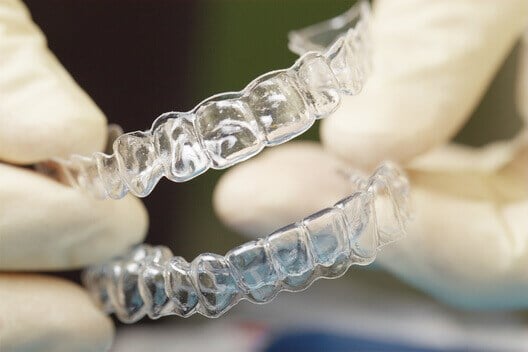
No one likes to fill their mouths with the sticky goop that typically accompanies creating dental molds. Dental Express uses intra-oral scanning to get a concise view of your mouth. That information is used to create the clear trays that will straighten your teeth. The bottom line is you spend less time in the dental chair and more time showing off your new smile.

3. Incredible detail—3D printers can create accurate replicas down to 6 microns.

How small is that? Well, for comparison, there are roughly 25,400 microns in an inch. A grain of sand from Coronado Beach is somewhere between 100 to 2,000 microns. Pretty amazing, isn’t it? Now imagine how this attention-to-detail can help your smile!

4. Precise retainers and invisible braces

If you have a teenager, chances are braces are in his or her future. The number of North American teens who need some type of orthodontic treatment has nearly doubled to 80 percent. Not only do 3D printers provide the needed trays in record time, but they are also easily replaced if they’re lost.

A new smile is now more affordable than ever!

Now, Dental Express makes it easier and more affordable than ever to get a straight, star-quality smile with SmileCorrect: a clear align therapy where our dentists print trays onsite, tailored to your specifications. This reduces what was once a $5,000 to $8,000 treatment to a total cost of $3,600—requiring only $200 a month for 18 months. Our SmileCorrect treatment has no credit check, charges no interest, and because all trays are 3D printed in house, it’s easier to replace missing or damaged trays. The dentists and health care professionals at Dental Express would love to start you on your journey to a straighter smile! Contact us today!

Sources: Lee, Dan P. “Metal Mouths.” New York Magazine. Online. National Association of Dental Laboratories. “Digital Dentistry: Is 3D Printing Revolutionizing Restorations? Online. Woo, Hee-Sun and Seok-Hun Kim. “A Study on Applying a 3D Printer to Healthcare; Dentistry Area.” Indian Journal of Science and Technology.

The 5 Riskiest Sports for Your Teeth

The 5 Riskiest Sports for Your Teeth: Every sports fan has seen a favorite athlete take a serious tumble, receive an elbow in the face or get smacked with a baseball. While it’s one thing to see these unfortunate incidents play out on ESPN, it’s a different matter when you, your son or your daughter is the one facing an injury. While mouthguards remain one of the best ways to reduce the risk of sport-related dental injuries, they are worthless if not used. In one survey conducted by the American Association of Orthodontists, a staggering 67 percent of parents admitted that their child didn’t always wear a mouthguard when playing sports. If that isn’t alarming enough, how about this: Out of the 7 million recreation-related injuries each year, more than half are sustained by children as young as five.

five-riskiest-sports-for-your-teeth

When should you wear a mouthguard?

Granted, each sport has its risks and rewards, and if you’re not wearing a mouthguard–or using one ineffectively–any activity can pose a greater risk to your teeth. You should always wear a mouthguard for the following sports:

  • Basketball
  • Boxing
  • Equestrian sports
  • Track and field events
  • Field hockey
  • Football
  • Gymnastics
  • Handball
  • Ice hockey
  • Inline skating
  • Lacrosse
  • Martial arts
  • Racquetball
  • Rugby
  • Soccer
  • Softball
  • Squash
  • Volleyball
  • Water polo
  • Wrestling
  • Any extreme sport

Sound like a lot? It is. But remember that the National Youth Sports Safety Foundation estimates that in any given year, 3 million teeth are knocked out during organized sporting events.

The 5 Most Dangerous Sports for Your Teeth

However, out of the list above, there are several “repeat offenders: — the sports most likely to result in a dental injury. We count down the top five, and number one may surprise you.

5. Skateboarding and Other “Thrill Seeking” Sports

This category includes snowboarding and skiing. While these do not involve any contact with opponents, a carelessly planned maneuver can result in contact with the pavement.

4. Boxing, Wrestling, and Marital Arts

It makes sense that if your opponent is throwing a punch at your face, he or she may take out a few incisors with it. Some studies show that more than 50 percent of wrestlers interviewed reported some type of dental injury. Because many of these sports, including martial arts, require the use of mouthguards, dental injuries are not as common as they could be.

3. “Ball and Stick” Games

These include baseball, hockey, lacrosse, and any game involving striking a ball with a stick or bat. While these games may actually account for a larger number of injuries, these injuries are generally not as severe because many of them, such as hockey and lacrosse, require players to wear mouthguards and other protective gear.

2. Football

You’re surprised it isn’t number one, aren’t you? At some point, it probably was. In the 1950s, prior to widespread mouthguard use, 54 percent of football injuries involved teeth. Fast forward 60 years, and the dental injury rate is around 2.8 percent.

1. Basketball

If you’ve ever played a pickup game at Ward Canyon Park or watched the San Diego State Aztecs face an opponent, you understand that basketball is a “no-contact sport” in name only. In one study, men’s basketball counted for roughly 10.6 injuries per 100 athletes—more than three times the amount by football. Women’s basketball also had an exponentially higher rate of injury at 5 incidents per 100 athletes. Next time you watch a professional or college game, take a look at how many athletes are wearing mouthguards. They aren’t used as often as they are in football. In fact, an alarming number of collegiate basketball players have unprotected teeth!

Be prepared for dental emergencies.

It’s also important to know exactly what to do in case of an injured tooth or dental emergency. Of course, before you or your child begins any sport, talk to your dentist about the importance of mouthguards. While they are easily available, the most effective ones will be customized to fit the exact shape of your mouth. Whether you’re a point guard on the varsity team or you’re a weekend warrior, speak to your family dentist about what type of mouthguard would be right for you. Dental Express offers dental care for the entire family, including SmileCorrect, teeth implants san diego, emergency dental care and maintenance services. Our practice features compassionate care coupled with state-of-the-art dentistry at four convenient locations in San Diego: Downtown, Point Loma, Clairemont and Santee. Contact us to schedule an appointment today.

Sources: American Dental Association. “Mouthguards.” Online. American Dental Association. “Play It Safe: Prevent Facial Injuries with Simple Sports Safety Precautions.” Online. American Dental Association. “Do You Need a Mouthguard?” Online. Incident Journal of the American Dental Association. Online. Knowlton, Rick, DMD, MAGD, et. al. “Sports-Related Dental Injuries and Sports Dentistry.” Online. Petruska, Susan, DMD, AACD and Jesisca Forestier. “Dental Injfuires from Sports Trauma: Review and Case Study.” Journal of Cosmetic Dentistry.” Schonbrun, Zach. “N.C.A.A. Players Ignore Advice on Mouth Guards, Often at Their Own Peril.” New York Times. Online.

Dental Insurance: Use It or Lose It

You’ve had a rough week and want to order take-out. You call the restaurant and clearly ask for a side order of steamed dumplings. The order arrives and you pay the delivery man (or you may have already paid on line through a credit card). You sit down to enjoy your meal after a crazy week at work. What? No dumplings. You’re not only disappointed, but you’re miffed because you’ve PAID for those dumplings. You call the restaurant to be sure they make this right. If you’re that upset over paying for food you didn’t receive, why aren’t you worried over using dental benefits you’ve paid for but not used? Not using your dental insurance is throwing your money away. While there is a lot of deviation among plans, most will pay for two cleanings per year. These cleanings are vital because your dental hygienist can clean your teeth in hard- reach places that your toothbrush and floss can’t go. It’s understandable that it can be difficult to navigate the maze of dental insurance. You may wish to take a look at some of the more common terms used in insurance. We also like to let our patients know that their benefits for the calendar year are about to expire. Remember, if you haven’t used your two cleanings by Dec. 31, you lose them for that year.

dental-insurance-use-it-or-lose-it

Americans with Dental Benefits

Most Americans –roughly 92 percent– get their dental benefits through an employer or groups such as AARP. Many others get dental insurance through other programs such as Medicaid. While more Americans have dental coverage than they did in the past, many do not take advantage of it. Studies reveal that Americans with dental insurance are more likely to go to the dentist, and to take their children to the dentist. The result is not only good dental health, but freedom from a variety of other health problems that are related to poor oral hygiene. But despite these obvious benefits, Americans are still skipping annual dental appointments. And children have a better track record of have regular checkups than adults.

According to the Centers for Disease Control:

  • 83 percent of children aged 2-17 have received a dental visit in the last year.
  • Of those age 18-34, just a little more than half (62 percent) have seen the dentist in the last year.
  • Of those over 65, 62.4 percent have seen a dentist in the last year.

Clearly, there is some room for improvement.

Remember: Dental health impacts regular health.

You may be surprised to learn that unhealthy teeth can contribute to disease such as heart disease, diabetes, osteoporosis and infection of the heart lining. Sleep apnea, a condition where you stop breathing repeatedly during the night, increases your risk of stroke, high blood pressure and heart disease. One of the most confusing aspects of dental benefit plans is the vocabulary. If you don’t understand the language, you can’t understand your benefits.

Here are some commonly used terms:

Contract term: The length of time for your insurance–usually 12 months. Deductible: The amount you have to pay before your insurance will pay for services. For example, if you have a $50 deductible, it means you will have to pay $50 out-of-pocket before your insurance will pay their part. Coinsurance: This is what you have to pay after you reach your deductible. For example, suppose Cindy has a $50 deductible and 20% coinsurance. This means that after she pays $50 for dental services, her insurance policy will pay 80% for services. After she reaches her deductible, she is responsible for paying 20% of her bill. Yearly maximum: Unlike most health insurance plans, a dental insurance yearly maximum refers to the maximum amount of money the dental insurance policy will pay during the benefit year, not the maximum out of pocket to be paid by the patient. Exclusions: Services that are not covered. Still confused? Don’t worry. Our professionals are happy to help you navigate through the sometimes confusing maze of dental insurance. Schedule an appointment today.